Forensic Biology Laboratory: From Crime Scene to DNA Analysis
During my time at the Honors College at IUI, one of the most transformative academic experiences I engaged in was an advanced Forensic Biology laboratory course. In this course, my professor piloted a newly developed, interactive lab manual that guided students through the entire forensic DNA analysis process - beginning at a simulated crime scene and ending with capillary electrophoresis and DNA profile interpretation.
The course was designed to replicate the real-world workflow of a forensic laboratory. Rather than completing isolated experiments, we following biological evidence through every stage of forensic analysis:
-
Crime scene investigation & documentation
-
Evidence collection & establishing chain of custody
-
Presumptive and confirmatory tests on unknown biological fluids
-
DNA extraction
-
DNA quantification
-
PCR amplification of STR regions
-
Separation via capillary electrophoresis
-
DNA profile interpretation
Through this immersive experience, I developed technical laboratory skills, strengthened my analytical reasoning, and gained firsthand insight into the scientific rigor required in forensic science work. More importantly, I learned how precision, documentation, and ethical responsibility directly impact scientific conclusions, especially in a field where data may influence legal outcomes.
This expereince challeneg me to move beyond theoretical understanding and apply forensic biology techniques in a systemic, professional context. It solidified my confidence working with biological evidence and deepened my understanding of how laboratory science operates in high-stakes environments.
*Warning - Photos of Bodily Fluids Present*
Crime Scene Investigation:
Documentation, Evidence Collection & Chain of Custody
In this section, we processed the mock crime scene as if it were a real forensic investigation. We:
-
Secured the scene using proper PPE.
-
Conducted a systematic zone search.
-
Photographed all evidence (overall, mid-range, close-up).
-
Documented location and condition of each item.
-
Properly packaged biological evidence.
-
Completed chain of custody paperwork.
-
Created a crime scene sketch.
Two major evidence items were selected and submitted for laboratory testing. This section demonstrated proper evidence handling and documentation procedures used in real forensic cases.

Find the established Chain of Custody here:
Alternative Light Source on Suspected Saliva Stain

Luminol on Suspected Bloodstain

Alternative Light Source & Biological Screening
We used Alternate Light Source (ALS) technology to detect biological fluids that are not visible under normal lighting. Different wavelengths were applied to look for fluorescence.
-
Evidence #19, #15, and #20 were examined.
-
Fluorescence indicated possible biological material.
-
Luminol was used on suspected blood evidence (#19).
This step helped determine which items required further biological testing.
Blood Spatter Analysis (BSA)
In this section, we practiced analyzing bloodstain patterns to understand how blood behaves at a crime scene.
We:
-
Classified patterns (passive, projected, transfer).
-
Measured droplet length and width.
-
Calculated impact angle.
-
Estimated area of origin height.
This section strengthened understanding of how math and physics are applied in forensic investigations to reconstruct events.

Swipe Blood Spatter Pattern

Calculating Impact Angle of Blood Spatter
The serology portion of this lab focused on identifying and confirming the presence of biological fluids using a structured approach of presumptive and confirmatory testing. Rather than analyzing only one fluid type, this section demonstrated how forensic scientists differentiate between blood, saliva, semen, and unknown biological stains using biochemical and immunological methods.
We began with presumptive testing, which serves as an initial screening step. These tests are designed to quickly indicate the possible presence of a biological fluid but are not specific enough to confirm its identity.
-
Blood detection was performed using HemaStix, which reacts to the peroxidase activity of hemoglobin and produces a rapid color change if blood is present.
-
Saliva detection involved Starch-Iodine and Phadebas testing, both of which identify amylase activity, an enzyme found in saliva.
-
Semen screening was conducted using the Acid Phosphatase (AP) test, which produces a strong color change when semen is present due to high acid phosphatase enzyme activity.
All presumptive tests were performed alongside positive and negative controls to validate reliability and accuracy.
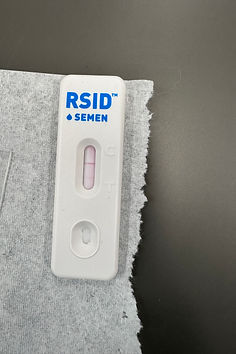
Following positive presumptive results, confirmatory testing was conducted to definitively identify the biological fluid and, when applicable, confirm human origin. Immunochromatographic RSID tests were used to confirm the presence of:
-
Human blood (RSID-Blood)
-
Human saliva (RSID-Saliva)
-
Human semen (RSID-Semen)
For semen analysis, additional confirmatory techniques included microscopy and Christmas Tree staining. Microscopic examination allowed visualization of sperm cells, while differential staining colored sperm heads red/pink and tails green/blue, confirming semen presence.
Unknown evidence items were then tested using the same structured approach. Evidence #19 was confirmed to contain human blood, and Evidence #0 was confirmed to contain saliva. The combination of fluorescence screening (ALS), presumptive testing, and confirmatory immunological assays ensured accurate biological identification.
Overall, this section demonstrated the layered forensic approach used in real casework: screening evidence, confirming biological identity, validating results with controls, and preserving samples for further DNA analysis. It reinforced the importance of accuracy, contamination prevention, and scientific validation in forensic serology.
Serology Analysis: Blood, Saliva & Semen
RSID-Blood Test

RSID-Semen Test

Phadebas Test for Saliva

Microscopic Examination of Sperm
DNA Extraction
We extracted DNA from:
-
A blood cutting
-
A buccal swab
The process included:
-
Breaking down cells (Proteinase K, DTT)
-
Organic extraction (Phenol-Chloroform-Isoamyl Alcohol)
-
Ethanol precipitation
-
DNA resuspension in buffer
This section demonstrated how DNA is isolated from biological material.
Read about the process of DNA extraction via Phenol-Chloroform-Isoamyl Alcohol (PCIA) here:
Buccal Swab NanoDrop Results
Blood Cutting NanoDrop Results


DNA Quantitation: NanoDrop Spectrophotometry
We measured:
-
DNA concentration
-
DNA purity (A260/280 and A260/230 ratios)
Using NanoDrop spectrophotometry, we determined that the blood sample was high quality and suitable for further analysis.
This step ensured the DNA was usable before amplification.
PCR Amplification: Quantifiler Trio
We prepared the extracted DNA for amplification using STR kits.
-
Evaluated Quantifiler results
-
Ensured standard curves were accurate, giving reliable results
-
-
Confirmed concentration was within range.
-
Determined no pre-treatment was necessary.
PCR allowed specific STR regions of DNA to be copied millions of times for analysis.
Read more about the process of PCR here:
A typical Quantifiler Trio standard curve:

Allele Calls from Blood Sample

Full DNA Profile

Capillary Electrophoresis (CE) & DNA Profile Intepretation
Amplified DNA fragments were separated by size using capillary electrophoresis.
-
Added size standard and formamide.
-
Ran positive and negative controls.
-
Generated an electropherogram.
This step separates DNA fragments so individual STR alleles can be detected.
Using forensic software (OSIRIS), we:
-
Reviewed control samples.
-
Identified allele peaks.
-
Checked for artifacts.
-
Generated a full 16-locus STR profile.
The EV Blood sample produced:
-
A complete profile
-
No allele dropout
-
70% peak height ratio
-
Amelogenin result indicating female DNA
This section demonstrated full forensic DNA profiling from evidence to interpretation.
Skills in DNA Analysis & Their Courtroom Application
The forensic biology techniques performed in this laboratory are important because they transform biological evidence into scientifically reliable, courtroom-ready data. Each step, from systematic evidence collection and documented chain of custody to DNA extraction, quantification, amplification, and STR interpretation, requires precision, validation, and adherence to standardized protocols to ensure results are accurate and legally defensible.
Proper crime scene processing and detailed documentation preserve evidentiary integrity. By maintaining chain of custody records and following contamination-prevention procedures, I practiced the same accountability required in real forensic casework. In court, these records demonstrate that evidence was handled consistently and without compromise.
Serological testing further strengthened reliability through a layered analytical approach. Performing presumptive screening (e.g., enzyme-based testing) followed by confirmatory immunochromatographic assays required careful sample preparation, controlled timing, and interpretation of test lines. Using positive and negative controls reinforced the importance of validation in scientific reporting.
DNA analysis provided the most powerful evidentiary value. Through careful microliter pipetting, purity assessment using A260/280 ratios, PCR preparation, and evaluation of peak height ratios and artifacts in STR profiles, I developed the technical precision necessary for high-stakes forensic analysis. STR profiling can link individuals to a crime scene, exclude suspects, identify victims, and support CODIS database comparisons. Because these methods are standardized, quality-controlled, and statistically supported, they meet established legal standards for admissibility.
Overall, this experience demonstrated how technical laboratory skill, analytical reasoning, and strict quality control transform biological stains into objective, defensible evidence that can withstand legal scrutiny.
Find my final report here:
Reflection: Growth as Scientific Professional
This forensic biology project transformed the way I think about scientific responsibility, precision, and evidence. before this experience, I understood DNA analysis in a conceptual manner, but throughout this lab, I learned what it means to generate defensible scientific data. Performing organic extraction, calculating dilution factors for PCR, carefully pipetting fluids, and interpreting peak height ratios in STR profiles requires for more than procedural repetition, but instead discipline, attention to detail, extreme organization, and analytical decision-making.
One of the most significant areas of growth was learning to evaluate data critically, rather than simply accepting results. When reviewing electropherograms, I had to distinguish true alleles from artifacts like pull-up and stutter, and assess whether peak height ratios met interpretation thresholds. This process strengthening my ability to analyze complex data and make evidence-based conclusions. I also developed a deeper appreciation for scientific validation, such as positive and negative controls, contamination, and documentation, which are the backbone for effective forensic laboratory work, and without them, hold heavy, legal consequences.
This experience shifted my mindset from student to emerging professional. I began approaching laboratory work with greater intentionality, with the understanding that every step must withstand scrutiny under legal standard. As a future science professional, this project reinforced the importance of precision, accountability, and ethical responsibility. I am no longer learning scientific techniques and theories, but instead learning how to apply scientific rigor in a way that impacts justice and public trust.